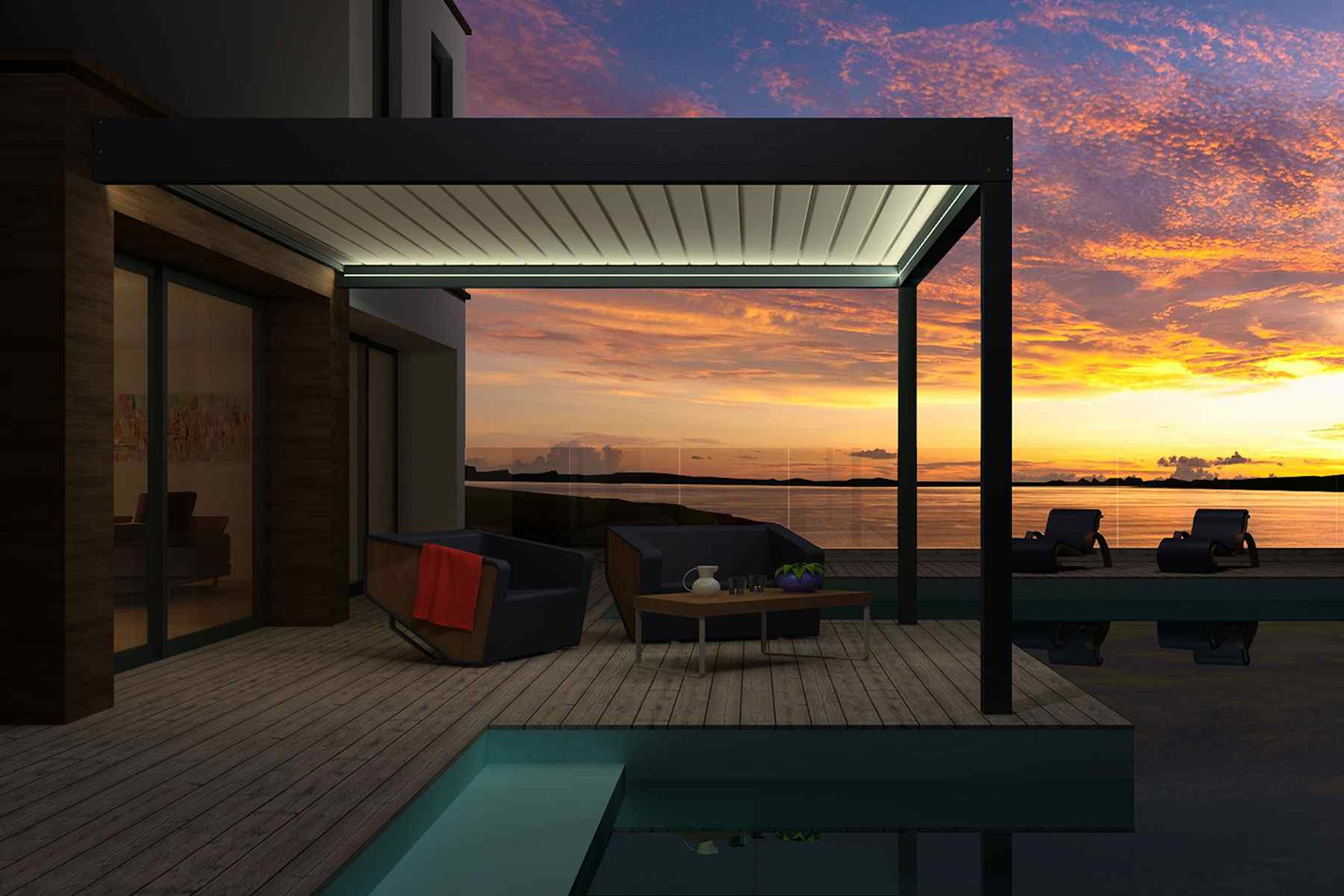
Bioclimatic Pergola: The Smartest Way to Control Sun, Shade, and Outdoor Comfort
A bioclimatic pergola is a motorized aluminum pergola with adjustable louvers that lets you control sunlight, ventilation, and rain protection in real time. If your patio is too hot in summer, unusable in rain, or underutilized for business revenue, this system gives you year-round usability without building a full extension.
If you’re a homeowner upgrading your backyard or a decision-maker managing hospitality, commercial, or multi-family property, you’re likely facing rising heat, unpredictable weather, and higher expectations for outdoor comfort. A bioclimatic pergola directly solves those issues.
What Is a Bioclimatic Pergola and How Does It Work?
A bioclimatic pergola features rotating aluminum louvers that adjust from fully open to fully closed.
- Open louvers allow airflow and natural light.
- Tilted louvers control glare and reduce heat gain.
- Closed louvers create a watertight roof with integrated drainage.
In my experience specifying and installing these systems, what actually makes them “bioclimatic” is airflow control. Hot air escapes through angled blades, creating passive cooling underneath.
The mistake I see most often is confusing them with fixed pergolas. Fixed slats don’t give you climate control, but adjustable louvers do.
Why Is a Bioclimatic Pergola Worth the Investment?
1. Year-Round Usability
According to sources, outdoor living projects consistently rank among the top features buyers want, and a new patio can recover up to 100% of its cost at resale in some markets.
When outdoor space becomes functional in sun and rain, property value perception increases.
2. Energy Efficiency
Here is what actually works: installing a bioclimatic pergola adjacent to large glass doors. By adjusting louvers seasonally, you reduce solar heat gain in summer and allow warming sunlight in winter.
This can reduce cooling loads, especially in south- and west-facing exposures.
3. Commercial ROI
For restaurants and hospitality venues, I’ve seen seating capacity increase by 20–40% simply by weatherproofing terraces. More usable days = more revenue.
How Does a Bioclimatic Pergola Compare to Other Patio Covers?
Vs. Traditional Pergola
- Fixed slats
- No rain protection
- Limited climate control
Vs. Retractable Awning
- Fabric wears faster
- Less wind resistance
- No full water drainage system
Vs. Glass Roof
- Traps heat
- Requires mechanical shading
Bioclimatic pergolas combine durability, airflow, and automation in one system.
What Features Should You Look For?
In my experience, not all systems are equal. Focus on:
- Powder-coated aluminum structure
- Motorized louvers with remote or app control
- Integrated gutter and downspout system
- Wind and rain sensors
- Optional LED lighting and side screens
- Wind resistance ratings (important for coastal areas)
The mistake I see most often is underestimating wind load requirements. Always verify engineering specs—especially for commercial installations.
Is a Bioclimatic Pergola Right for Your Property?
You should seriously consider one if:
- Your outdoor space is underused due to weather
- You manage hospitality or multi-family assets
- You want modern architectural appeal
- You’re prioritizing long-term ROI over short-term cost
Homeowners love the lifestyle upgrade. Commercial operators love the predictable revenue expansion.
Final Thoughts
If you want control over sun, airflow, and rain without building a permanent enclosed structure, a bioclimatic pergola is one of the most strategic outdoor investments you can make.
It’s not just a shade structure.
It’s a climate-management system for your outdoor space.
Start by evaluating your orientation, usage goals, and structural requirements. Then consult a qualified supplier who provides engineered drawings and warranty-backed systems.
Because the right pergola doesn’t just cover space; it transforms how you use it.